Throughout NYC, you'll get dermatologist-guided facials designed for your skin type, tone, and goals—think Hydrafacial for quick luminosity, LED for acne/redness, microcurrent for lift, and lymphatic drainage to de-puff. Providers establish one primary goal, screen for contraindications, and use research-driven, pigment-safe actives with minimal downtime. Count on precise protocols, extended hours, and clear pre/post care (discontinue retinoids, SPF after). You'll leave hydrated, brighter, and camera-ready—and you'll see how to choose treatments, schedule maintenance, and support results at home.
Main Points
Why New York City Is the Ultimate Facial Destination
Though excellent facials are offered everywhere, New York City distinguishes itself for its exceptional concentration of proficiency, innovation, and access. You take advantage of a dense network of board-licensed estheticians, dermatology-backed spas, and research-driven protocols supported by hospital affiliations and biotech startups. NYC's cultural diversity guarantees methods from K-beauty to European lymphatic methods are available and adapted to your skin type and tone. During fashion week, practitioners refine quick-recovery strategies that reduce downtime while delivering camera-ready results—approaches you can obtain year-round. You'll also discover state-of-the-art devices verified through clinical data, plus clean formulations validated by ingredient transparency standards. With extended hours, multilingual staff, and seamless coordination with medical providers, you receive exact, safe treatments reinforced by evidence and real-world performance in a demanding city.
How to Select the Perfect Facial for Your Skin Objectives
With so much expertise and technology accessible in NYC, the following step involves matching treatments to your unique concerns, skin type, and comfort level with downtime. Start with a thorough skin consultation. Share your background (rosacea, acne, melasma, sensitivity), current products, and any medications like retinoids or isotretinoin. Ask your specialist to conduct goal mapping: define one primary goal (clarity, hydration, firmness, brightening) and one secondary goal.
When dealing with breakout-prone skin, prioritize non-comedogenic treatments and gentle exfoliation. For dark spots, seek out clinical-strength acids and pigment-safe actives. Sensitive skin benefits from barrier-first approaches and minimal fragrance. If collagen support is your priority, consider methods that stimulate dermal remodeling, balanced with adequate healing periods. Confirm contraindications, expected results, and a realistic series plan. Coordinate budget, frequency, and at-home maintenance to sustain outcomes.
HydraFacial: Thorough Cleansing, Instant Glow
You'll enjoy a Hydrafacial that employs a advanced vacuum-assisted tip to purify, exfoliate, clear congestion, and infuse targeted serums in one continuous treatment. Studies indicate this method increases hydration, reduces pores, and smooths texture with zero downtime. You can expect an visible glow—skin becomes brighter and smoother right after, making it perfect before events or as part of a consistent care plan.
How Hydrafacial Works
As Hydrafacial is developed for both instant radiance and skin health, it follows a exact, three-step procedure: clean/exfoliate, extract, and infuse. Initially, your provider glides a patented tip that sweeps away dead cells while delivering mild acids to loosen debris. This primes pores without harsh scrubbing.
Subsequently, extraction mechanics come into play. The device's vortex suction creates a controlled vacuum that dislodges sebum, makeup residue, and micro‑impurities from congested areas, reducing manual pressure and reducing trauma. Solutions in the handpiece maintain debris suspended, working to prevent re-deposition on your skin.
Finally, the system delivers targeted actives—antioxidants, peptides, and hydrating humectants—using the same channel. This harmonized delivery strengthens barrier function and optimizes ingredient penetration. Your clinician adjusts tip intensity and serum selection to suit your skin type, sensitivities, and goals.
Immediate Radiance Benefits
That three-step protocol shows benefits the instant the handpiece lifts—skin looks clearer, light reflects more evenly, and pores look tighter. You notice immediate radiance because Hydrafacial simultaneously unclogs, exfoliates, and infuses specific actives without irritation. By clearing away surface sebum and dead cells, it decreases scatter and enables healthy skin reflect light, so your complexion looks bright, not shiny.
The vortex-extraction process eliminates debris while hydrating agents replenish the barrier, minimizing the appearance of fine lines and dryness. Then glow boosting serums—typically peptides, antioxidants, and lightweight hyaluronic acid—sink in more effectively, enhancing microcirculation and plumpness. Most clients leave makeup-optional, and results are consistent across all skin types, including sensitive and acne-prone. Expect a smooth feel, refined texture, and a visible, camera-ready glow that lasts for days.
LED Phototherapy for Acne and Skin Redness
While it's gentle and non-invasive, LED light therapy addresses acne and redness with clinically proven wavelengths that reduce inflammation and improve skin. Throughout treatment, blue light diminishes acne-causing bacteria on the skin's surface and deep in pores, minimizing breakout frequency without causing irritation. Red light reaches deeper layers to control inflammation, boost circulation, and support collagen activity that strengthens healing and barrier resilience.
You'll recline under precisely adjusted panels while your aesthetician customizes treatment strength and timing for your skin type, Fitzpatrick level, and individual needs. Sessions pair well with extractions and restorative serums to improve results and decrease post-treatment redness. Expect zero downtime—just a continuous lessening in blemishes and visible flushing over multiple sessions. Steady treatment timing and proper sun protection help you maintain healthier-looking skin between appointments.
Microcurrent Facial Sculpting for Lift and Tone
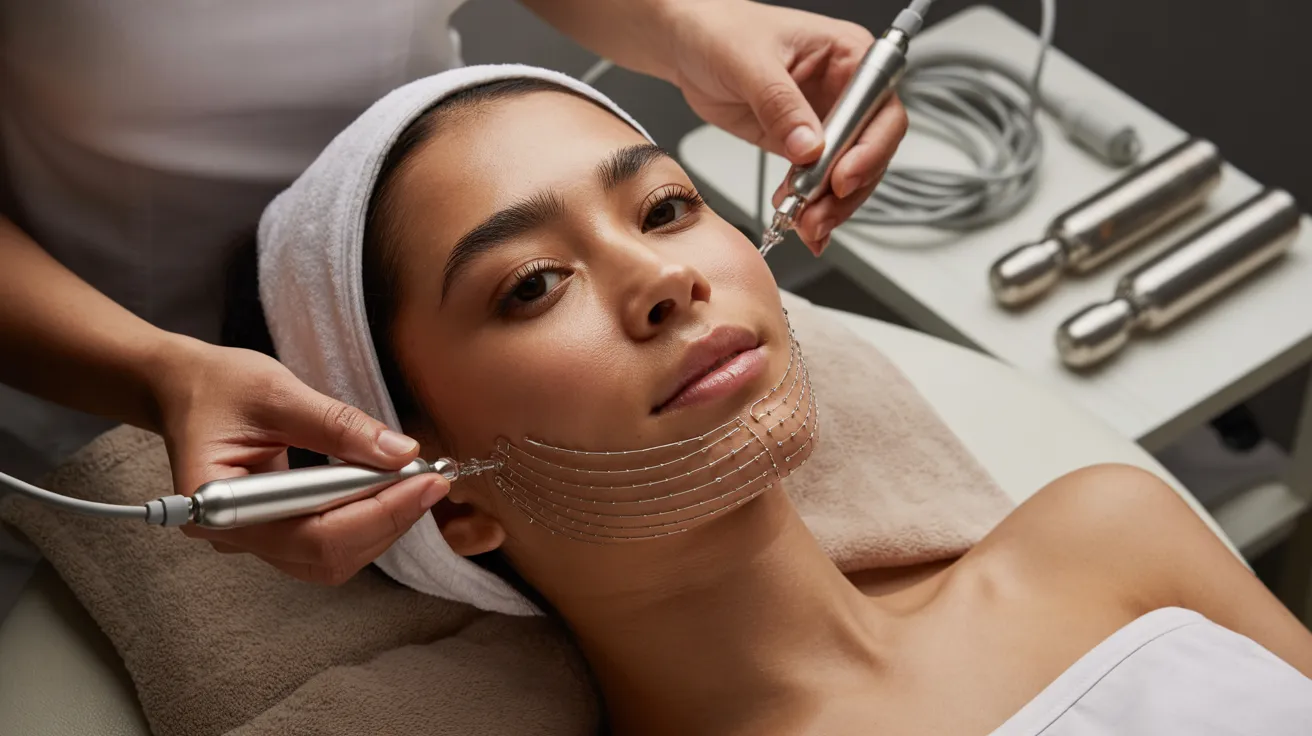
You'll notice gentle, low-level electrical currents stimulate facial muscles, enhancing ATP production and collagen activity for a toned, lifted look. Evidence and client experiences indicate improved contour, reduced puffiness, and gentle wrinkle softening, typically after a series with follow-up treatments. You're a perfect fit if you desire noninvasive lift and have no contraindications such as pregnancy, pacemakers, or epilepsy; we'll customize frequency, hydration, and post-care (sun protection, no retinoids for 24 hours) to safeguard results.
The Way Microcurrent Works
Experience microcurrent: a low-level, electrical energy that mirrors your body's natural bioelectricity to activate facial muscles and rejuvenate skin function. During treatment, your provider sweeps conductive spheres across mapped vectors, delivering precise currents measured in microamps. You'll experience a gentle tingling as the current engages motor points for focused facial toning.
Microcurrent functions by promoting ATP generation, which drives cellular stimulation and protein synthesis. With enhanced ATP, fibroblasts are prepared to produce structural proteins, and skin cells improve ion exchange and hydration balance. The current also supports lymphatic flow and microcirculation, helping tissues receive oxygen and nutrients while decreasing stagnation.
Equipment is calibrated to stay subsensory and secure, preserving skin integrity and muscle physiology. Your session tailors intensity, polarity, and timing to match your objectives and skin sensitivity.
Advantages and Results
With the methodology covered, it's time to look at what microcurrent sculpting delivers: a raised, more sculpted look with enhanced muscle tone and smoother contours. You can expect a subtle "post-treatment lift" immediately, with more toned cheeks, a crisper jawline, and smoother nasolabial areas. Scientific evidence demonstrates gentle electrical currents can increase ATP and stimulate collagen and elastin activity, which aids in refine texture and minimize the appearance of fine lines.
Results accumulate with a series, refining facial symmetry and contour retention between visits. Circulation improvements may illuminate dullness and minimize puffiness, while lymphatic support helps detoxify. Clients also report stress relief from the relaxing, rhythmic application, leaving you relaxed and revitalized. As definition improves, your skin confidence rises, supported by measurable tone and consistent, camera-ready radiance.
Suitable Candidates and Care
Although microcurrent is gentle, it's most beneficial if you have slight to medium laxity, early jowl relaxation, reduced cheek definition, or fine lines and you want noninvasive lift and tone without downtime. You're also a good candidate if you're not pregnant, don't have a pacemaker, and aren't at risk for seizures. With acne or rosacea, we'll adapt settings to honor sensitive conditions and reduce flare risks.
To achieve the best results, concentrate on smart skin preparation: show up well-hydrated, skip retinoids and exfoliants 24–48 hours in advance, and delay neuromodulator or filler plans for a minimum of two weeks after your session. Plan for a series—typically six to ten treatments—then maintenance routines every 4–6 weeks to sustain your lift. Promote collagen through protein, sleep, SPF, and gentle lymphatic massage between visits.
Chemical Peel Procedures: From Light Enhancement to Advanced Skin Resurfacing
While you might have undergone facials in the past, chemical peels provide a targeted approach to refine texture, fade discoloration, and boost radiance by stimulating controlled exfoliation of the epidermis. In NYC spas, clinicians pair acids and concentrations to your needs, skin type, and tolerance, then track peel depth in real time. Superficial peels (AHAs, low-strength BHAs) renew dullness with minimal downtime; medium options (TCA blends, Jessner) target pigment and fine lines; deeper resurfacing targets etched wrinkles and acne scars.
Your provider evaluates Fitzpatrick type, medications, and barrier health, and plans neutralization timing to halt activity in a safe and consistent manner. Prepare for a prep phase, precise application, and sunscreen-centered aftercare. You'll observe improved skin tone within days; successive treatments improve pores and texture while minimizing post-inflammatory hyperpigmentation risk.
Lymphatic Drainage and Facial Massage Techniques
You can utilize lymphatic drainage to minimize puffiness, enhance circulation, and support a clearer complexion—benefits validated by limited clinical studies on edema and microcirculation. When visiting the spa, your esthetician employs light, directional strokes and gentle holds that trace lymph pathways while steering clear of excessive pressure. When practicing at home, you'll follow these patterns with clean hands or a tool, keeping movements gradual toward the ears and collarbones, and stopping if you notice discomfort or irritation.
Advantages of Lymph Drainage
While facials typically emphasize exfoliation and hydration, focused lymphatic drainage offers a different kind of benefit: de-puffing, enhanced circulation, and a more radiant, calmer complexion. You'll observe reduced fluid retention around the eyes and jawline as stagnant lymph moves through your detox pathways. By supporting immune modulation, this technique allows your skin manage environmental stressors and breakouts with less reactivity.
Expect subtler but significant shifts: enhanced tone, more rapid recovery after treatments, and reduced appearance of congestion-related redness. Patients with seasonal allergies or travel-related swelling often notice visible relief within 24–48 hours. Because lymph lacks its own pump, guided movement encourages efficient waste clearance and nutrient delivery. With ongoing sessions, you accumulate cumulative benefits—more stable barrier function, more even texture, and better product absorption—so your results persist beyond the treatment room.
Manual Therapy Techniques
Begin with deliberate touch: manual lymphatic drainage combined with facial massage utilizes soft, purposeful strokes to move interstitial fluid, reduce muscle tension, and enhance microcirculation without inflaming the skin. Your esthetician examines lymph node pathways and skin reactivity, then uses featherweight traction toward preauricular and submandibular points to promote decongestion. Pressure variation is deliberate: lighter force over fragile periorbital tissues, slightly deeper along temporalis and masseter to ease myofascial tension without compromising capillaries.
They utilize texture mapping to detect congestion, edema, or adhesions, adjusting glide, pace, and vector. Strokes remain slow, continuous, and rhythmic to improve parasympathetic tone and barrier integrity. Expect meticulous sequencing—from sternum and neck priming to facial drainage—so fluids have a clear exit route, reducing post-treatment puffiness and amplifying glow.
Home Self-Massage Techniques
Starting with consistent, simple routines, at-home lymphatic drainage and facial massage can diminish puffiness, alleviate jaw and brow tension, and support skin radiance between spa visits. Cleanse, add a slip (a lightweight oil such as squalane), and use light pressure. With flat fingers, stroke from the center of your face to the ears, then down the sides of your neck to the collarbones to encourage drainage. Make small circles along the jaw, temples, and brows to release overworked muscles.
Start your jade rolling routine at the neck, then proceed upward and outward over cheeks and forehead; ensure strokes remain gentle to prevent irritation. Facial cupping requires soft silicone cups, minimal suction, and steady glides—never stationary holds. Keep sessions between 5–10 minutes, performed 3–4 times per week. Refrain from treating broken skin, active acne conditions, or recently filled areas.
Ingredient-Forward Protocols and Clean Beauty
Because skin responds best to what it knows, clean beauty facials in NYC prioritize ingredient-forward methods that focus on transparent formulations, clinically validated actives, and minimal irritants. You'll find estheticians choose clean formulations with concise, readable labels and tested concentrations of vitamin C, niacinamide, peptides, ceramides, and gentle exfoliants like lactic acid. They exclude sensitizers—fragrance, drying alcohols, and unnecessary dyes—while preserving ingredient transparency so you can see what touches your skin.
Your treatment often begins with a patch test, then layers targeted actives based on barrier status and goal: lighten, pacify, or improve. Specialists tailor pH and contact time to decrease discomfort while retaining results. You'll leave with a clear plan: what to retain, what to switch, and how to monitor tolerance.
Seasonal Skincare Strategies for New Yorkers
From one season to the next, NYC's microclimates—wind tunnels, heated subways, air-conditioned offices, and muggy summers—stress your skin barrier in different ways, so your facial strategy should change with the seasons. In winter, prioritize winter hydration with ceramide-infused masks combined with humectants, then lock in with occlusives to lower TEWL. Spring can bring on Transient allergies; opt for soothing facial treatments with botanicals compatible with antihistamines plus barrier-restoring serums. Summer demands defenses against metropolitan pollution: cleansing with antioxidants, oxygenating facials, and regular non-comedogenic SPF touch-ups. In fall, prioritize Seasonal exfoliation to regulate turnover—choose gentle acids or enzymes, calibrated for your Fitzpatrick classification and tolerance.
In every season, ask for pH-balanced cleansers, microbiome-supportive actives, and patch testing when adding new ingredients. Your esthetician should adapt modalities to your climate, commute, and skin data, making results assessable and irritation minimal.
What to Anticipate During and After Your Facial
Prior to your appointment, you'll fill out a brief intake and share prescriptions, allergies, and recent treatments so your esthetician can set safe parameters. Follow the preparation timeline: discontinue retinoids 3 to 5 days beforehand, skip waxing or exfoliating 48–72 hours prior, and arrive makeup-free. Stay hydrated and bring your current regimen for review.
Throughout the facial, your esthetician will evaluate skin under magnification, clean, exfoliate, steam as appropriate, and carry out extractions only if indicated. You may experience targeted modalities, including enzymes, chemical peels, LED, or massage, based on goals and tolerance.
Afterward, you can expect mild redness for a couple of hours. Use recommended post care products: a gentle cleanser, barrier repair moisturizer, and broad-spectrum SPF 30+. Stay away from heat, workouts, and exfoliants for one to two days. Schedule your follow-up appointment per your plan.
Common Questions
Are Facials Hsa/Fsa Eligible or Eligible for Insurance Coverage in NYC?
Typically, facials are not HSA eligible items, not qualified for FSA reimbursement, and not covered by insurance in NYC when they're for cosmetic purposes. HSA/FSA funds can be used only when a licensed medical provider determines the treatment is medically necessary (like treating acne or dermatitis) and provides a Letter of Medical Necessity. Get documentation from your dermatologist, verify plan guidelines, and keep detailed receipts. Regarding insurance, verify CPT codes and prior authorization needs.
What Are the Expected Tipping Practices and Ranges for NYC Facialists?
Well-mannered clients typically tip 18-22% for facials; you should consider 15% for standard treatments and 25%+ for exceptional Service quality or specialized treatments. Several spas would rather receive Cash tips, though it's possible to include gratuity to a card. Tip assistants $5-$10 if they meaningfully helped. If the owner performs the service, tipping remains customary. For packages, tip on the total original price. When unsure, request information subtly about gratuity policies.
How Soon Should I Make Reservations During Peak Seasons?
Reserve 3–4 weeks beforehand for peak seasons. For weekend appointments, reserve 4–6 weeks out; prime time slots book first. During holiday periods (the Thanksgiving to New Year period, Valentine's, Mother's Day weekend), lock in appointments 6–8 weeks in advance, particularly for particular estheticians or add-ons. If you're feeling flexible during midday hours, two to three weeks can work. Get on waitlists, set cancellation alerts, and confirm 2 hours in advance. Book again at checkout to maintain a consistent schedule during busy periods.
Can I Bring My Own Skincare Products for Use During the Facial?
Absolutely—you may bring products, and it's a happy coincidence: working with formulas you know often minimizes irritation. Inform your esthetician prior to your appointment about allergies to specific ingredients and which products you're bringing. They'll examine how compatible they are, pH balance, and active components to stop potential conflicts (like combining retinoids with intense acids). For safety, supply full ingredient lists and refrain from bringing decanted samples. If a product isn't properly sterile or research-supported, they'll swap it for professional-grade equivalents. Arrive early so your consultation allows for protocol customization.
Do You Offer Fragrance-Free or Sensory-Sensitive Treatment Room Options?
Yes—numerous spas feature fragrance-free or sensory-sensitive treatment room alternatives. You can request delicate formulations, neutral linens, and softened lighting to minimize triggers. Ask for essential oil–free rooms, unscented laundry detergents, and HEPA-filtered air when possible. Share your sensitivities ahead of time so therapists modify pressure, music volume, and product selection. Evidence supports reduced sensory load for relaxation and skin tolerance. Get there early to patch-test products and confirm accommodations on your intake form.
Wrapping Up
You've got a city's worth of research-based options at your fingertips—utilize them strategically. Choose facials that suit your skin goals, season, and sensitivities, and work with licensed experts who detail the why behind every step. Like fine-tuning get more info a compass, small, regular choices steer your skin toward lasting radiance. HydraFacial for clarity, LED for calm, microcurrent for lift, and massage for flow—plus clean, gentle actives. Book thoughtfully, prep well, follow aftercare, and let your glow do the talking.